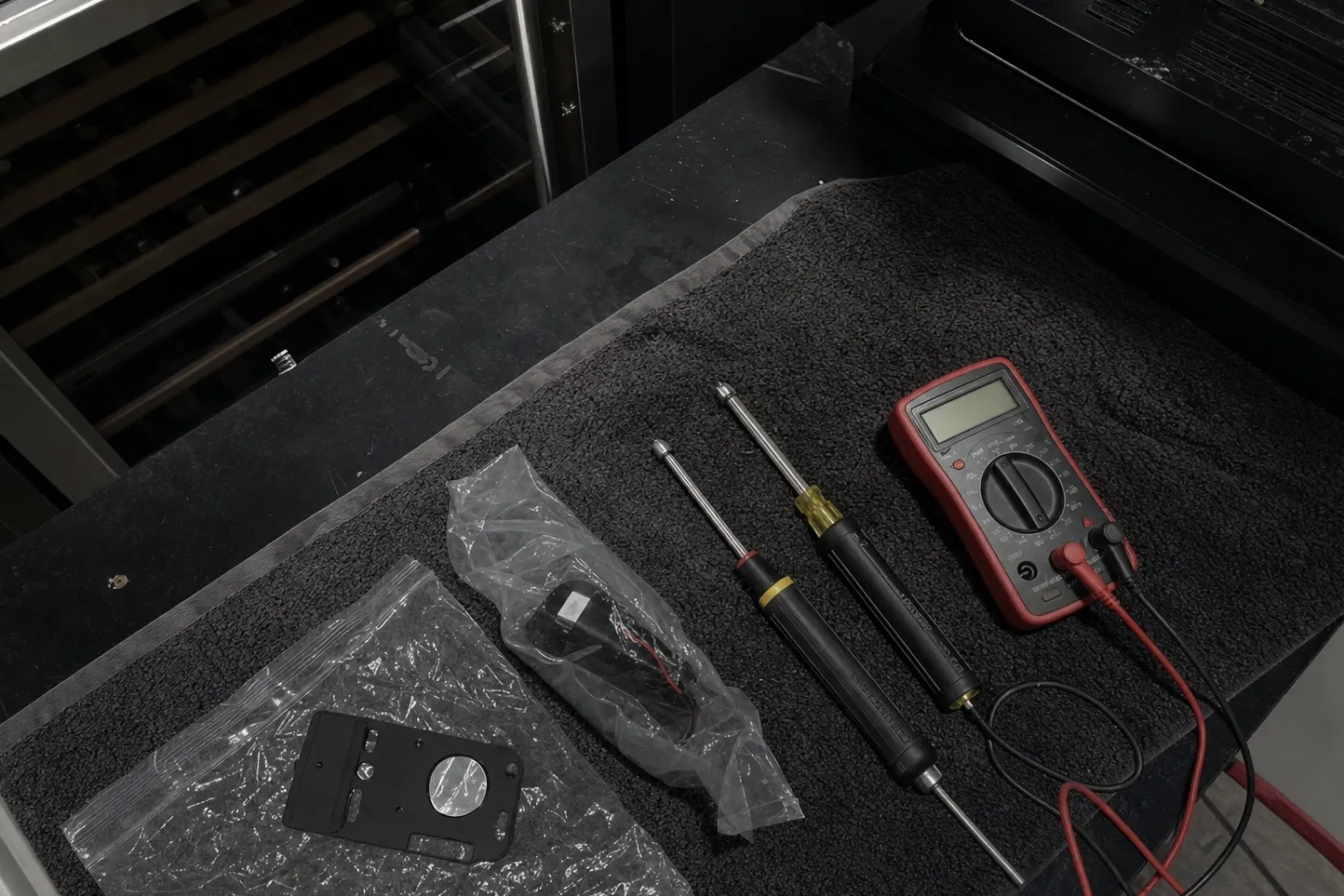
Refrigerator Repair
Sub-Zero Fresh Food Side Warming Up in a Phoenix Summer
The freezer holds hard but the fresh food side has drifted into the fifties. In this valley that is nearly always heat and dust reaching the condenser, or ice on the evaporator — not a dying compressor.
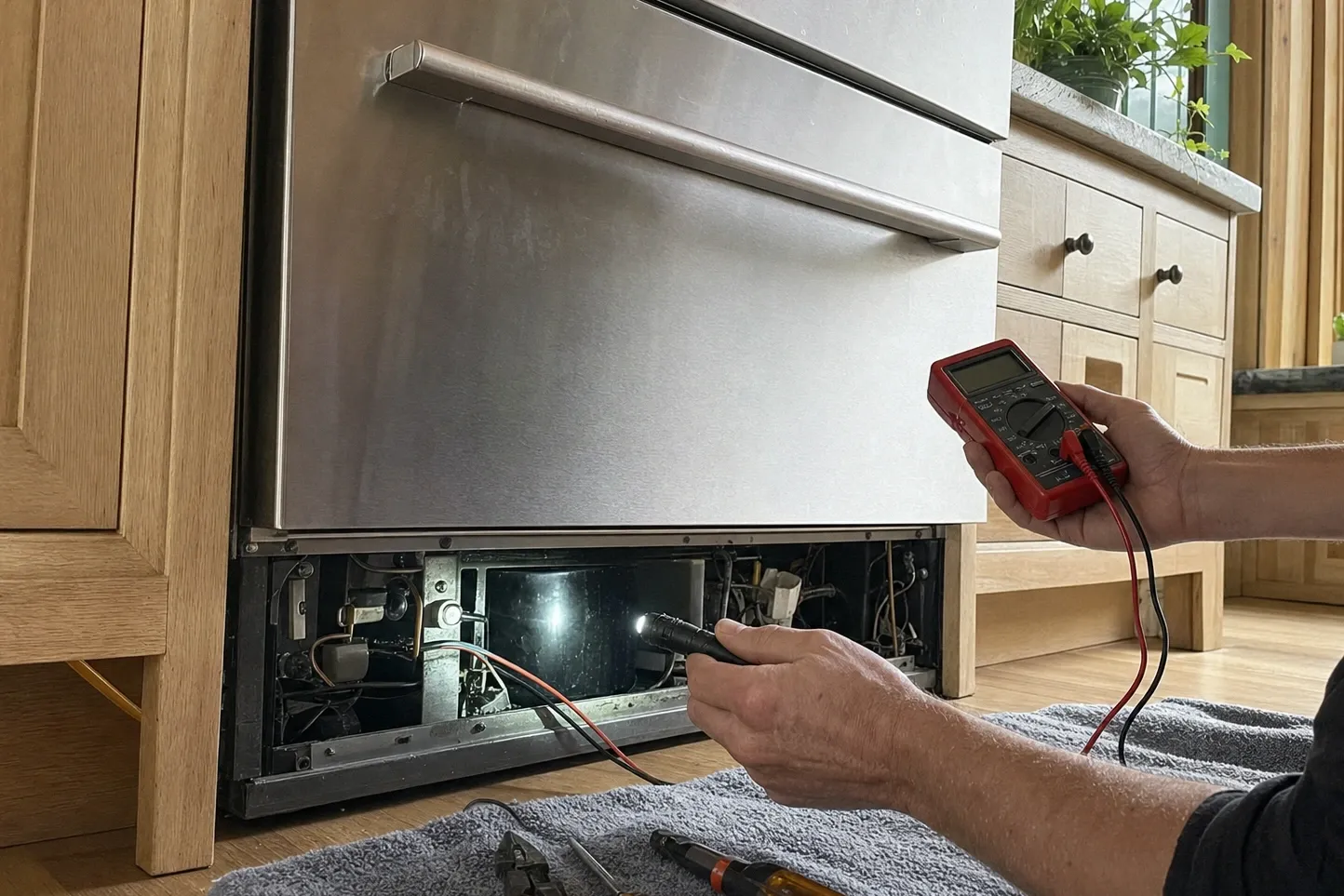
A freezer that still holds hard next to a fresh food side sitting in the fifties is the most common call this business takes between May and September, and it almost never means what people assume it means. Nobody rings up about a compressor; they ring up about milk. But the fear on the other end of the phone is usually the same one: that a built-in refrigerator which cost more than a car payment is finished.
In this valley it is nearly always one of three things, and two of them are air. The unit is being asked to reject heat into a room, a cabinet or a garage that is hotter than anything the design assumed, through a condenser that has been quietly collecting dust since the last time anyone looked at it. Or the evaporator behind the rear panel has iced over and the cold air is no longer getting out to the compartment. Those are different faults with different fixes, and you can usually tell which one you have from the kitchen floor.
What the two temperatures are telling you
Take two readings before anything else: what the panel claims, and what a thermometer in a glass of water on the middle shelf says after four hours. If the panel and the thermometer disagree by more than a couple of degrees, the problem may be a sensor rather than refrigeration at all, and that is a cheap outcome.
If both agree that the fresh food side is warm while the freezer is genuinely hard — ice cream firm, not soft — then capacity exists and distribution is the problem. If the freezer is also drifting, and especially if the compressor seems to run continuously without ever satisfying, you are looking at heat rejection or charge instead. That single distinction decides where the next hour goes.
The condenser, and where the dust comes from
Pull the grille at the top or bottom of the unit and look at the fins. A healthy condenser looks like a radiator. A Phoenix condenser in August often looks like felt.
There is a reason it happens faster here than almost anywhere. Flood-irrigated lots in Arcadia and the older parts of North Central put fine silt into the air every time a ditch runs. Monsoon dust walls put down a layer over everything in a few minutes. Add pet hair and the normal traffic of a kitchen, and a stack that needs to pass air freely is doing it through a mat.
Two things follow. The compressor runs longer and longer to reach the same temperature, then stops reaching it at all in the afternoon. And the condenser fan, which is trying to push air through that mat, works hotter than it should and dies younger than it should. A tired fan and a matted coil produce identical symptoms, so both get checked together — and cleaning one while ignoring the other is why some units are back on the list a month later.
When it is the evaporator side instead
If the condenser is reasonably clean and the freezer is holding hard, take the drawers out of the fresh food side and look at the rear panel. Frost patches, a whole slab of ice, or air that is barely moving at the vents all point at the evaporator and the defrost circuit rather than the sealed system.
Defrost failures are undramatic: a heater that no longer heats, a thermostat that stays open, or a drain line frozen solid so meltwater has nowhere to go. Ice builds a little more each cycle, airflow falls a little further, and the fresh food side warms by a degree a week until somebody notices. The tell is that turning the unit off overnight “fixes” it, because the ice melts — and then the same thing happens again over the next fortnight.
Door seals in a house that runs its cooling all day
Built-in units pull their doors shut against a vacuum seal, and in this heat those gaskets go soft years earlier than they do in a mild climate. One soft corner is enough. The unit then runs against a constant leak of room air, sweats around the frame, and never gets the fresh food side down in the afternoon no matter how cold the setting is.
Check it with a sheet of paper: close the door on it and pull. If the paper slides out anywhere along the run, the seal is not sealing there. Gaskets are a repair, not a replacement, and a hinge adjustment sometimes does it on its own.
What to check before you call, and when to stop
Clean the condenser. Confirm the freezer is genuinely hard. Look at the rear panel behind the drawers for ice. Test the door seal with paper. Move anything stacked against a vent inside the cabinet, and give it twenty-four hours to recover.
Stop at the point where a tool is needed on a sealed system, on wiring, or on a control board. Refrigerant is not consumed by a working system — if a unit is low, there is a leak, and the useful question is where. That is a gauges-and-meter question, and it is what the service call is for. Bring us the model number, the two temperatures, and whether the cabinet has ice at the back; that is most of a diagnosis before anyone has driven anywhere.
Common follow-ups
- How warm can the fresh food side get before food is at risk?
- Above about 40°F the clock starts, and above 45°F it runs fast. If the cabinet has been in the fifties for a full day, treat what is in it as suspect regardless of how the repair goes.
- Why does the freezer still work when the refrigerator does not?
- On most built-in units both sections are fed from cold air produced at an evaporator, and the fresh food side gets the smaller share of it. Anything that reduces airflow or capacity shows up there first, which is why a hard freezer next to a warm refrigerator is a symptom rather than a contradiction.
- Is it worth cleaning the condenser before booking a visit?
- Yes. It costs nothing, it is the most common single cause here, and if the cabinet recovers over the following day you have solved it. Take the grille off, vacuum along the fins rather than across them, and stop at any copper line or wiring.